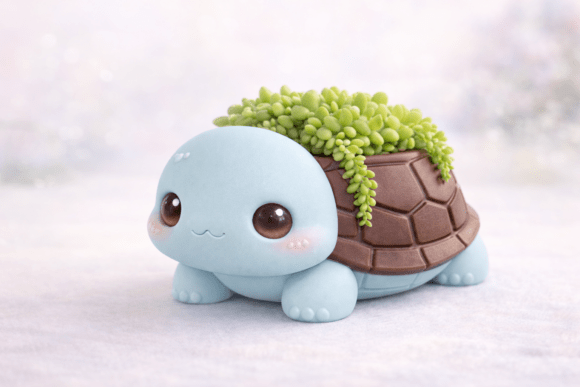
Turtle Planter Kawaii Succulent Pot STL 3D Model for 3D Print: A Guide to Crafting Cozy, Custom Greenery Displays
In the evolving landscape of digital fabrication and home decor, the intersection of technology and traditional aesthetics has created a new category of personalized art. Among the most charming entries into this space is the Turtle Planter Kawaii Succulent Pot STL 3D Model for 3D Print. This design does more than simply hold soil; it transforms a functional object into a statement piece that blends biological inspiration with modern manufacturing capabilities. For hobbyists, interior designers, and educators alike, understanding how to leverage this specific digital asset allows for the creation of unique, tactile experiences that resonate with both plant enthusiasts and collectors of kawaii culture.
The Aesthetic Appeal of Biophilic Design in Modern Interiors
Modern interior design increasingly emphasizes biophilic principles—design strategies that connect building occupants more closely to nature. The turtle planter exemplifies this trend by merging organic forms with living plants. The design features a soft, rounded body combined with a textured brown shell, creating a visual contrast that feels both natural and calming. Unlike geometric or industrial planters, this model introduces a sense of whimsy and warmth, often referred to as "kawaii" aesthetics, which prioritizes cuteness and comfort.
This aesthetic is particularly effective in spaces designed for relaxation or focused work. The smooth shapes and clean surfaces of the 3D-printed model ensure that the object looks polished regardless of the material used. Whether printed in a matte white PLA to emphasize the succulent’s greenery or in an earthy tone to mimic the turtle’s natural habitat, the form remains versatile. The shell functions not just as a decorative element but as a practical cavity, housing small succulents or trailing vines that gently spill over the edge, softening the hard lines of a desk or shelf.
Technical Specifications and Print Optimization
For those looking to bring this digital concept into the physical realm, the success of the final product relies heavily on understanding the underlying geometry and optimizing print settings. The Turtle Planter Kawaii Succulent Pot STL 3D Model for 3D Print is engineered with ease of fabrication in mind. The designer has accounted for common pitfalls in 3D printing, such as overhangs and structural instability, ensuring that even beginners can achieve high-quality results.
- Layer Height: A layer height between 0.16 mm and 0.2 mm is recommended. This range provides a good balance between surface smoothness and print time. Finer layers may reveal subtle details of the shell texture, while standard layers offer a quicker turnaround for bulk production.
- Infill Density: Since the planter needs to hold soil and moisture, structural integrity is paramount. An infill of 10–15% using either Gyroid or Grid patterns is sufficient. Gyroid infill is often preferred for its isotropic strength, meaning it provides consistent durability in all directions, which helps prevent cracking if the pot is bumped or moved frequently.
- Nozzle Size: Standard 0.4 mm nozzles are ideal for capturing the gentle curves of the turtle’s limbs and head without excessive detail loss. However, users with finer nozzles (0.2 mm) can enhance the texture of the shell if they desire a highly detailed finish.
One of the standout features of this STL file is its scalability. Because the model is built on parametric-friendly coordinates, it can be scaled up for larger desktop displays or down for miniature terrariums. This flexibility makes it suitable for various applications, from educational models for biology classes to large-scale installations in commercial lobbies.
Material Choices and Post-Processing Techniques
The choice of filament significantly influences the final character of the planter. While standard PLA is the most accessible option due to its low warping and ease of use, other materials offer distinct advantages. PETG provides greater water resistance, which is beneficial for a plant holder that may occasionally be overwatered. For a premium feel, ABS or ASA filaments offer higher heat resistance and durability, though they require an enclosed printer to prevent warping.
To achieve the multi-colored look often showcased in promotional images, post-processing plays a crucial role. The raised details on the turtle’s shell and limbs can be painted or sprayed with acrylic paints to create depth. A dry-brushing technique, where a nearly dry brush is lightly dragged over the surface, can highlight the texture of the shell, making it appear more realistic. Alternatively, users can employ dual-extrusion printers to print the base body and the shell in contrasting colors simultaneously, eliminating the need for painting entirely.
Sealing the interior with a waterproof liner or epoxy resin is also a critical consideration. Most 3D printed plastics are somewhat porous, and prolonged exposure to wet soil can degrade the material over time or lead to mold growth inside the layers. Applying a food-safe epoxy sealant ensures longevity and maintains the aesthetic integrity of the piece.
Practical Applications Across Different Sectors
The versatility of the Turtle Planter Kawaii Succulent Pot STL 3D Model for 3D Print extends beyond personal home decor. Its utility spans multiple professional and educational domains.
Educational Tools
In classrooms, this model serves as an excellent teaching aid for biology lessons regarding reptiles and plant life cycles. Students can study the anatomy of the turtle while learning about hydroponics or succulent care. The process of designing, slicing, and printing the model also introduces students to CAD software and additive manufacturing concepts, bridging the gap between digital design and physical reality.
Retail and Corporate Gifting
Businesses looking to offer unique corporate gifts will find value in this item. A branded turtle planter, perhaps customized with a company logo subtly integrated into the shell design, offers a memorable and eco-friendly alternative to traditional merchandise. It aligns with sustainability goals by encouraging plant ownership and reducing plastic waste associated with mass-produced ceramic pots.
Interior Styling and Event Decor
Event planners and interior stylists can utilize these planters to add a touch of whimsy to weddings, baby showers, or spring-themed parties. The pastel color palettes often associated with kawaii aesthetics make them perfect for nurseries or children’s rooms, creating a soothing environment. Their compact size allows for easy arrangement on tables, windowsills, or bookshelves, providing instant greenery without the maintenance demands of larger plants.
Considerations for Sustainable Printing
As with any 3D printing project, environmental responsibility should be considered. Using recycled PLA or biodegradable filaments like PHA can reduce the ecological footprint of the project. Additionally, optimizing the print orientation within the slicing software minimizes support material usage, thereby reducing waste. By planning the print layout efficiently, creators can maximize the number of units produced per spool of filament, making the process more cost-effective and sustainable.
Furthermore, the digital nature of the STL file means that designs can be shared and improved upon globally. This collaborative spirit encourages continuous innovation in 3D printable decor, leading to more efficient designs that use less material while maintaining structural integrity. Users are encouraged to experiment with different infill patterns and wall thicknesses to find the optimal balance between resource consumption and durability.
Conclusion
The Turtle Planter Kawaii Succulent Pot STL 3D Model for 3D Print represents a harmonious blend of artistic expression and technical precision. It offers a pathway for individuals and organizations to create meaningful, functional art that enhances living and working spaces. By understanding the print settings, material properties, and post-processing techniques outlined above, users can unlock the full potential of this design. Whether used as a personal desk companion, an educational tool, or a unique gift, this planter demonstrates how 3D printing can bring soft, cozy, and natural vibes into our digitally connected world.