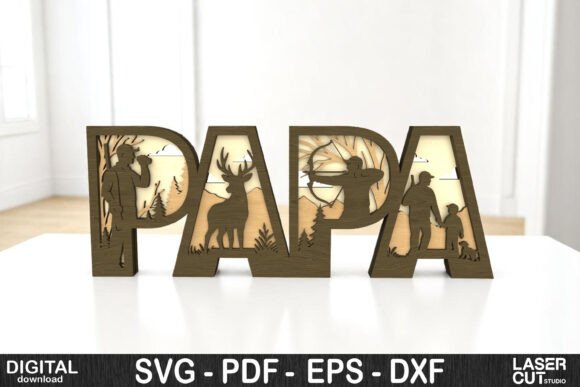
Papa Hunting Archery 3D Layered Sign
In the realm of digital fabrication and laser cutting, the transition from a conceptual design to a tangible object relies heavily on the quality and versatility of the source files. For hobbyists, small business owners, and professional makers alike, having access to precise, layered vector graphics is not just a convenience—it is a fundamental requirement for efficient production. The Papa Hunting Archery 3D Layered Sign represents a specific asset designed to streamline this process, offering a ready-to-use template that bridges the gap between digital planning and physical execution.
This product is not merely an image; it is a structured set of instructions for your machine. By providing files in multiple formats—specifically SVG, PDF, EPS, and DXF—the package ensures compatibility with a wide array of software ecosystems and hardware configurations. Whether you are operating a CO2 laser cutter, a fiber marker, or a diode engraver, understanding how to integrate these files into your workflow can significantly reduce setup time and minimize material waste. This guide explores how to effectively utilize the Papa Hunting Archery 3D Layered Sign within your creative or commercial workflows, focusing on preparation, technical integration, and strategic application.
Understanding the Asset Structure
Before uploading any file to your laser cutting software, it is crucial to understand what you are working with. A "3D layered" sign implies that the final physical product is constructed by stacking multiple distinct pieces of material. Each layer corresponds to a different depth or background element, creating visual depth when assembled. The Papa Hunting Archery design likely features intricate details related to archery equipment, silhouettes, or text, separated into distinct vector paths.
The availability of multiple file formats addresses different stages of the production pipeline:
- SVG (Scalable Vector Graphics): Ideal for most modern laser cutting software such as LightBurn, LaserGRBL, or CorelDRAW. SVGs preserve color data, which can be mapped to different power and speed settings for each layer, automating the cutting process.
- DXF (Drawing Exchange Format): A universal standard often used in CAD environments like AutoCAD or Fusion 360. If your workflow involves precise engineering tolerances or custom jigs for assembly, DXF provides reliable geometric accuracy.
- EPS (Encapsulated PostScript): Frequently used in graphic design software like Adobe Illustrator or Inkscape. This format is excellent if you need to make significant aesthetic adjustments before sending the file to the cutter.
- PDF (Portable Document Format): Useful for backup purposes or for machines that support direct PDF rasterization, though vector-based formats are generally preferred for clean cut lines.
Recognizing the strengths of each format allows you to choose the right tool for the job. For instance, if you are using LightBurn, importing the SVG directly may allow you to assign colors to layers instantly. If you are working in a more rigid CAD environment, the DXF might be the superior choice for maintaining exact coordinate precision.
Preparation and Material Selection
The success of a layered sign project depends less on the software and more on the materials selected and prepared. The Papa Hunting Archery 3D Layered Sign is compatible with wood, acrylic, and other laser-friendly substrates. However, the interaction between the material and the laser beam varies drastically, requiring careful pre-production planning.
Wood Variations
When using wood, such as basswood, birch plywood, or MDF, consider the grain direction and thickness consistency. For a 3D effect, you will typically use three to five layers of varying thicknesses. Thinner layers (e.g., 1/8 inch) are ideal for detailed foreground elements, while thicker layers (e.g., 1/4 inch) provide stability for the base. Ensure that all sheets of wood are flat and free of warping; uneven surfaces can cause focus issues with the laser lens, resulting in inconsistent cut quality across the sign.
Acrylic Considerations
If opting for acrylic, cast acrylic is generally recommended over extruded acrylic for engraving tasks due to its cleaner finish and resistance to melting. Clear acrylic can create a striking frosted effect when engraved, while colored acrylics offer vibrant contrast. When cutting acrylic, higher air assist pressure is often necessary to blow away molten plastic from the kerf, preventing re-etching on the backside of the cut.
Integration into Your Workflow
Integrating the Papa Hunting Archery 3D Layered Sign into your daily operations requires a systematic approach. Rushing the import process is a common source of error. Instead, treat the file upload as a calibration step.
- Import and Verify: Open your chosen software and import the primary file format (usually SVG or DXF). Zoom in on critical details, such as the tips of arrows or fine text. Check for broken lines or overlapping vectors that could cause the laser to trace the same path twice, potentially burning through delicate parts.
- Layer Assignment: Map each color or layer in the file to a specific material thickness. If your design uses red for the top layer and blue for the bottom, ensure your software recognizes these distinctions. Assign appropriate power and speed settings for each layer. Thinner materials require lower power and higher speeds to prevent scorching, while thicker bases may need slower passes for complete penetration.
- Nesting and Optimization: Arrange the cut paths efficiently on your virtual work area. While single signs do not require complex nesting, organizing them logically helps in tracking production time and material usage. This is particularly important if you are producing batches for craft fairs or e-commerce listings.
- Test Cuts: Never run a full batch without a test cut. Use a scrap piece of the same material to verify focus height, power levels, and air assist. Adjust settings based on the test result until the edges are clean and the alignment marks are sharp.
Post-Processing and Assembly
The laser cutting phase is only half the equation. The "3D" aspect of the Papa Hunting Archery sign relies entirely on precise assembly. After cutting, remove any loose debris from the kerfs. Sanding the edges lightly can remove minor charring, especially on wood, ensuring a premium finish for commercial products.
Assembly requires patience and the right adhesives. For wood-on-wood bonds, a thin cyanoacrylate (CA) glue or a strong wood PVA works well. For acrylic, specialized acrylic cements or epoxy resins are necessary to achieve clear, durable joints. To maintain the 3D structure, spacers or shims can be inserted between layers if the design calls for a specific floating effect. Alternatively, aligning the layers perfectly flush creates a solid, block-like appearance.
Quality control at this stage is vital. Check for gaps between layers and ensure that the sign sits flat on a surface. Misalignment during cutting or assembly can detract from the visual impact of the hunting theme. If errors occur, document them to adjust your software settings or material handling procedures for future runs.
Strategic Applications and Market Fit
Once produced, the Papa Hunting Archery 3D Layered Sign opens up several revenue and utility channels. Its thematic nature makes it highly suitable for niche markets.
Commercial Production
For entrepreneurs, this design serves as a scalable product line item. Because the digital file is downloaded instantly and has no recurring costs per unit, the profit margin can be optimized by sourcing materials in bulk. These signs perform well at holiday markets, particularly around Christmas, where rustic or outdoor-themed décor is popular. They also appeal to sporting goods stores, hunting lodges, or archery ranges looking for branded merchandise.
Personal and Gift Markets
On a personal level, the sign functions as a meaningful gift. The combination of craftsmanship and specific interest (archery/hunting) adds sentimental value. Professionals in this field often use such items for home office décor, reinforcing their identity and passion. The ease of production means you can customize orders quickly, responding to client requests for specific sizes or material choices without significant lead times.
Content Creation and Education
Bloggers and educators in the maker space can use this project as a case study. Demonstrating how to handle layered files, manage multi-material setups, and troubleshoot alignment issues provides valuable content for audiences learning laser cutting techniques. The Papa Hunting Archery 3D Layered Sign acts as a practical teaching tool, illustrating best practices in vector processing and physical assembly.
Long-Term Workflow Efficiency
To maximize the return on investment for this digital asset, organize your library systematically. Save the original Papa Hunting Archery 3D Layered Sign files in a dedicated folder structure labeled by theme, date, and format. Keep records of the successful laser settings (power, speed, frequency) for each material type. This documentation transforms a one-time download into a reusable component of your production knowledge base.
Furthermore, stay updated with new software features that might enhance your ability to manipulate layered designs. As laser technology evolves, newer capabilities like rotary attachments or dual-head systems may allow you to add engravings or additional dimensions to the sign. By keeping your workflow flexible and your file management organized, you ensure that the Papa Hunting Archery 3D Layered Sign remains a versatile tool in your arsenal, capable of adapting to changing market demands and creative goals.
Ultimately, the value of this product lies not just in the graphic itself, but in how seamlessly it integrates into your existing processes. By respecting the technical requirements of layered vector files and adhering to disciplined preparation and assembly protocols, you can produce high-quality, consistent results that satisfy both personal standards and commercial expectations.