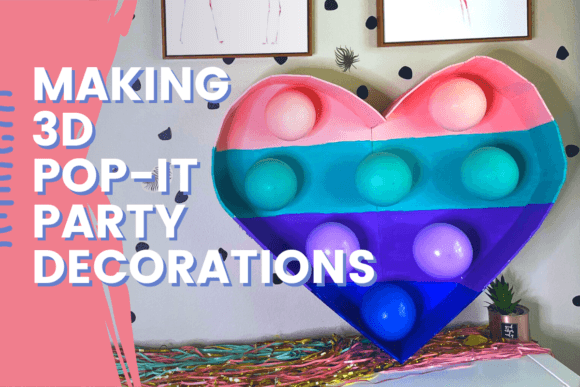
Making 3D Pop-It Decorations
Transforming a simple fidget toy into a large-scale, three-dimensional party centerpiece is easier than you might think. Making 3D Pop-It Decorations allows you to take the viral sensation of the silicone pop-it and scale it up for immersive event design. Whether you are planning a child’s birthday, a corporate team-building retreat, or a creative workshop, adding tactile, oversized elements to your decor can elevate the atmosphere from standard to memorable.
This approach to decoration is not just about aesthetics; it is about engagement. When guests encounter a giant, colorful grid they can actually interact with, it breaks the ice and encourages social interaction. The process involves creating a structural frame and covering it with custom-cut materials that mimic the bubbly texture of the original toys. It is a project that blends craft, engineering, and party planning into one cohesive activity.
Why This Project Matters Across Different Groups
The appeal of 3D pop-it decorations spans a wide demographic, but the value proposition shifts depending on who is holding the scissors. For hobbyists and DIY enthusiasts, the primary draw is the challenge and the visual payoff. Creating something from scratch provides a sense of accomplishment that buying mass-produced decor cannot match. It allows for customization in color, size, and shape that store-bought items rarely offer.
For educators and parents, these decorations serve as more than just background noise. They represent a tangible learning opportunity. The construction process teaches basic geometry, spatial reasoning, and fine motor skills. A parent teaching their child how to assemble a 3D pop-it wall is not just decorating; they are engaging in shared problem-solving and creativity. The finished product becomes a conversation starter about design and manufacturing.
Small business owners and event planners look at this trend through a different lens: ROI and differentiation. In a market saturated with balloons and streamers, offering interactive installations sets an event apart. It creates "Instagrammable" moments that attendees naturally share on social media, providing free marketing for the host. The low material cost compared to the high perceived value makes it a smart investment for budget-conscious organizers.
Ease of Use and Accessibility
A common misconception is that creating large-scale crafts requires advanced woodworking or sewing skills. However, Making 3D Pop-It Decorations is designed to be accessible to beginners. The core technique relies on assembling flat panels and connecting them, rather than complex joinery. Racquel, an experienced DIYer, breaks down the process into manageable steps that anyone can follow.
The tools required are typically household items: cardboard, foam board, utility knives, hot glue guns, and colored paper or vinyl. There is no need for expensive machinery or specialized training. This low barrier to entry means that even those who have never made anything before can achieve professional-looking results. The step-by-step nature of the guidance ensures that mistakes are easily corrected, reducing the anxiety often associated with new projects.
- No prior experience needed: The instructions are visual and logical, guiding you from raw materials to a finished structure.
- Flexible materials: You can use what you already have at home, such as cereal boxes for the frame and wrapping paper for the surface.
- Scalable complexity: Start with a small cube and work your way up to a full wall installation as your confidence grows.
Creativity and Customization
One of the strongest advantages of this DIY approach is the level of control over the final aesthetic. Commercial pop-it toys come in fixed sizes and limited color palettes. By making your own, you can match the exact branding colors of a corporate event or the theme colors of a birthday party. You can also experiment with textures. While traditional pop-its are smooth silicone, you can create variations using felt for a softer look, or glossy laminate for a vibrant, reflective finish.
Designers and marketers appreciate this flexibility because it allows for brand integration. Imagine a tech company launching a new app; a giant, glowing 3D pop-it with the app’s logo embedded in the center serves as a powerful physical representation of digital connectivity. The tactile nature of the installation reinforces the user experience of the product itself.
Furthermore, the modular nature of the design means you can create shapes beyond the standard cube. You can build arches, tunnels, or even letter forms. This opens up possibilities for photo booths where guests can stand inside or behind the structure, creating unique framing opportunities for photographs. The ability to customize height, width, and depth ensures that the decoration fits perfectly within any venue space.
Cost and Efficiency Considerations
When evaluating any party decoration, cost is a major factor. Mass-produced inflatable structures can be expensive to rent or buy, and they often lack the unique charm of handmade items. Making 3D Pop-It Decorations offers a cost-effective alternative. The materials are inexpensive and widely available. Cardboard and paper are often recycled from previous projects, further reducing waste and expense.
However, efficiency matters too. For busy professionals, spending days crafting a single decoration may not be feasible. This is where structured classes become valuable. Learning the most efficient assembly techniques saves time in the long run. By understanding how to cut panels accurately and glue them securely without excessive drying time, you can complete a large installation in a single afternoon. This speed is crucial for last-minute event planning or when managing multiple events in a short period.
Reliability is another key aspect. A well-made 3D pop-it structure is durable enough to withstand the touch of dozens of guests. Unlike delicate paper decorations that tear easily, a properly constructed foam and cardboard base with a sturdy outer layer can handle significant interaction. This durability ensures that the decoration remains intact throughout the entire event, maintaining its visual impact from start to finish.
Who Should Try This?
If you are looking to add a hands-on element to your next gathering, this project is worth considering. It is particularly suitable for:
- Birthday Parents: Who want to create a magical, interactive environment for their children without breaking the bank.
- Party Planners: Who need unique, customizable decor options to stand out in a competitive industry.
- Educators: Who wish to incorporate STEM concepts into classroom activities through fun, tangible projects.
- DIY Hobbyists: Who enjoy weekend crafting projects that result in functional, decorative art pieces.
Even if you are not planning a party immediately, the skills learned in Making 3D Pop-It Decorations are transferable. The techniques of structural assembly and surface finishing can be applied to other large-scale craft projects, from holiday ornaments to educational models. It is a versatile skill set that enhances your creative toolkit.
Join the Creative Community
Ready to bring your next event to life? Joining a class led by experts like Racquel provides more than just instructions; it offers community support and inspiration. You will learn pro tips for cutting clean edges, securing joints, and achieving a polished finish that looks professionally made. Whether you are a complete beginner or a seasoned crafter looking for a new challenge, this class offers practical, actionable advice.
By investing time in learning how to make these decorations, you are investing in the quality of your future events. You gain the confidence to create bespoke decor that reflects your personal style or brand identity. So, if you are interested in creating this 3D pop-it for your next party, join this class now and discover the joy of turning simple materials into extraordinary experiences.