Evaluating the Column Pen Holder STL: A Practical Guide to 3D Printed Desk Organizers
The modern workspace has evolved significantly, shifting from simple utility to a blend of functionality and aesthetic expression. As remote work and hybrid office models become standard, the demand for personalized desk accessories has surged. Among these items, the Column Pen Holder STL, often categorized under Desk Organizer 3d designs, has emerged as a popular choice for hobbyists and professionals alike. This article provides a detailed evaluation of this specific digital asset, examining its design philosophy, printing requirements, and suitability for various user needs.
Understanding the Design Philosophy
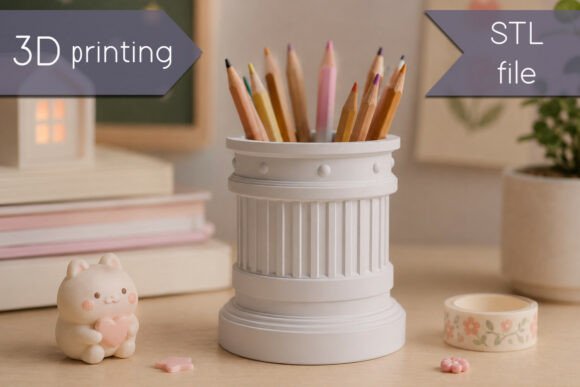
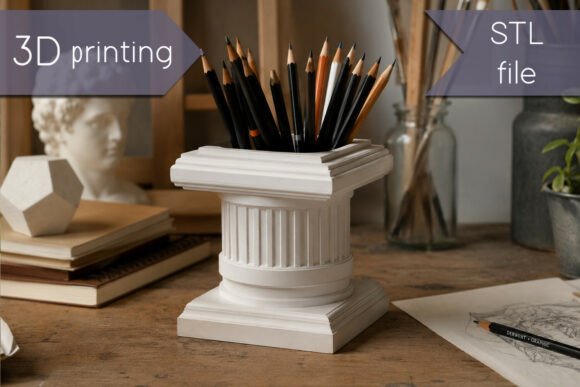
At its core, the Column Pen Holder STL represents a minimalist approach to desktop organization. Unlike complex, multi-compartment organizers that dominate the market, this model focuses on verticality and clean lines. The "column" aspect refers to its structural integrity and visual weight, which anchors a desk without overwhelming it. For users who appreciate mid-century modern or industrial aesthetics, this design offers a sophisticated alternative to cluttered storage solutions.
What distinguishes this particular file is its optimization for additive manufacturing. The designer has prioritized printability alongside form. This means that while the object appears sleek and polished in renders, the underlying geometry is engineered to minimize common 3D printing pitfalls such as warping, stringing, or excessive support material. For those new to the technology, understanding this balance between artistic intent and mechanical feasibility is crucial.
Visual Appeal and Spatial Efficiency
In terms of spatial efficiency, the column design excels by utilizing vertical space rather than horizontal footprint. On a crowded desk, every square inch matters. A traditional tray-style organizer might spread out across the surface, consuming valuable real estate for mouse movement or document placement. In contrast, the Column Pen Holder STL consolidates writing instruments into a single, upright axis. This not only keeps pens, pencils, and styluses visible and accessible but also maintains a clear line of sight across the workspace.
The aesthetic appeal lies in its simplicity. Without intricate lattice work or moving parts, the focus remains on the material itself. Whether printed in PLA for a matte finish or PETG for durability, the column shape allows the texture of the filament to play a role in the overall look. It serves as both a functional tool and a subtle decorative element, fitting seamlessly into home offices, creative studios, or corporate environments.
Technical Considerations for Printing
When evaluating any digital model for personal fabrication, technical specifications are just as important as visual design. The description accompanying this file highlights several key features that impact the user experience: compatibility with FDM and resin printers, minimal support requirements, and ease of use.
FDM vs. Resin Compatibility
One of the significant advantages of this model is its broad compatibility. Most desktop users operate either Fused Deposition Modeling (FDM) or Stereolithography (SLA/Resin) printers. The geometry of the Column Pen Holder STL is robust enough to hold up well on FDM machines, which are generally more forgiving and cost-effective for larger objects. However, for users seeking higher detail resolution, particularly if they plan to add surface textures or fine engravings later, the model also performs admirably on resin printers.
This dual compatibility makes it an excellent entry point for beginners who may be experimenting with different technologies. It removes the barrier of needing specialized software adjustments to make the file printable, allowing users to focus on calibration and material selection instead.
Support Structures and Post-Processing
A critical factor in successful 3D printing is the amount of support material required. Supports are temporary structures generated by slicing software to hold overhanging parts in place during printing. They must be removed afterward, often leaving behind marks that require sanding or filing. The Column Pen Holder STL is designed to minimize this step. By optimizing the angle of overhangs and ensuring a stable base, the need for extensive supports is reduced.
This reduction translates to less post-processing time. Users can expect to spend less time cleaning up their prints and more time enjoying the finished product. For those using resin printers, where support removal can be delicate and messy, this optimization is particularly valuable. It ensures a cleaner final result with fewer risks of damaging the model during the deburring process.
Comparative Analysis: Alternatives and Context
To make an informed decision, it is helpful to compare the Column Pen Holder STL with other common approaches to desk organization. While this digital file offers distinct benefits, it may not be the ideal solution for every scenario.
- Traditional Retail Organizers: Mass-produced plastic or metal organizers are widely available and inexpensive. However, they often lack customization and unique character. The 3D printed column holder allows for color matching, size adjustments (if the STL parameters allow), and a sense of personal achievement in creation.
- Complex Multi-Tool Holders: Some 3D models offer integrated slots for phones, tablets, and multiple pen types. While versatile, these designs often require more complex printing setups, including brims, rafts, and heavy supports. The column holder trades versatility for simplicity and speed of production.
- Handmade Wooden or Ceramic Holders: Artisanal options provide high-quality materials and craftsmanship. However, they come at a premium price and longer lead times. A 3D printed version offers immediate gratification and lower material costs, though it may not match the tactile warmth of wood or the permanence of fired ceramic.
The decision ultimately hinges on what the user values most. If the goal is rapid prototyping, customization, and low-cost experimentation, the Column Pen Holder STL is a strong contender. If the priority is heirloom quality or specific material properties like natural wood grain, one might look elsewhere.
Use Cases and Best-Fit Scenarios
Identifying the right context for using this model helps clarify its value proposition. Here are several scenarios where this design shines:
- Gift Giving: The description notes that this is great for making thoughtful handmade gifts. Because the design is charming and practical, it serves as an excellent present for teachers, colleagues, or friends who appreciate tech-savvy decor. The ability to choose a favorite color adds a personal touch that store-bought items cannot replicate.
- Home Office Setup: For individuals working from home, maintaining a tidy environment can boost productivity. A dedicated, aesthetically pleasing spot for pens reduces visual noise and cognitive load. The column design fits well on smaller desks where space is at a premium.
- Learning Tool: For students learning 3D modeling or printing, this model serves as a perfect project. Its simplicity allows learners to experiment with infill density, layer height, and wall thickness without the frustration of failed prints due to complex geometry.
Limitations to Consider
No product is without limitations. The primary constraint of the Column Pen Holder STL is its capacity. It is designed primarily for standard-sized writing instruments. It may not accommodate bulky markers, wide-brush calligraphy pens, or oversized tools effectively. Additionally, since it is a digital file, the physical quality depends entirely on the printer's calibration and the user's skill level. A poorly calibrated machine will produce a subpar result, regardless of how well-designed the STL file is.
Decision Factors for Buyers
Before downloading and printing, potential users should consider a few practical factors. First, ensure your slicer software is updated to handle the file format correctly. Second, verify that your printer bed size can accommodate the column’s dimensions, although most standard beds are sufficient. Third, consider the material choice. PLA is easy to print and biodegradable, making it suitable for indoor decor. ABS or ASA offers better heat resistance, which might be preferable if the desk is near a window or heater.
The inclusion of a single STL file for instant download aligns with the current trend toward digital convenience. There is no shipping delay, no packaging waste, and immediate access to the resource. This immediacy is a significant advantage for those who want to start a project right away.
Conclusion
The Column Pen Holder STL stands out as a well-thought-out addition to the world of 3D printable desk organizers. By balancing clean design with print-friendly engineering, it addresses the common pain points of hobbyists while delivering a stylish end product. Whether used to enhance a personal workspace, create a meaningful gift, or simply practice printing skills, this model offers a reliable and satisfying experience. For those seeking a minimalist, efficient, and customizable solution to desk clutter, it represents a smart and practical choice.