Designing Delight: How the Fluffy Dragon STL Model Bridges Fantasy and Functional 3D Printing
In the rapidly evolving landscape of additive manufacturing, the line between industrial prototyping and consumer artistry has never been more blurred. Today’s makers are not just looking for functional parts; they are seeking personality, narrative, and emotional resonance in their prints. Enter the Fluffy Dragon STL 3D Model for Easy 3D Print, a digital asset that exemplifies this shift toward "accessible fantasy." This model is not merely a file; it is a testament to thoughtful design engineering that balances aesthetic charm with printability, offering a compelling case study for professionals, creators, and hobbyists alike.
The Evolution of Consumer 3D Models
For years, the 3D printing community was dominated by mechanical objects—gears, brackets, and tool holders. While these remain essential, there has been a significant pivot toward organic, character-driven models. This trend reflects a broader cultural desire for tangible connections to digital worlds. Consumers are increasingly interested in personalized gifts, decorative home goods, and collectibles that tell a story. The Fluffy Dragon STL 3D Model for Easy 3D Print sits squarely at the intersection of this creative demand and technical feasibility.
What distinguishes this model from generic dragon assets found on various repositories is its intentional design philosophy. It is crafted specifically for the intermediate printer, addressing common pain points such as warping, stringing, and structural fragility. By prioritizing well-defined volumes and reinforced thicknesses, the designer has removed much of the guesswork typically associated with printing complex organic shapes. This approach democratizes high-quality 3D printing, allowing users who may lack advanced slicing skills to achieve professional-grade results.
Deconstructing the Design: Form Meets Function
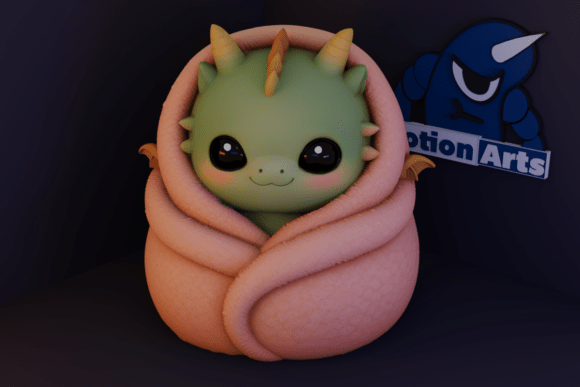
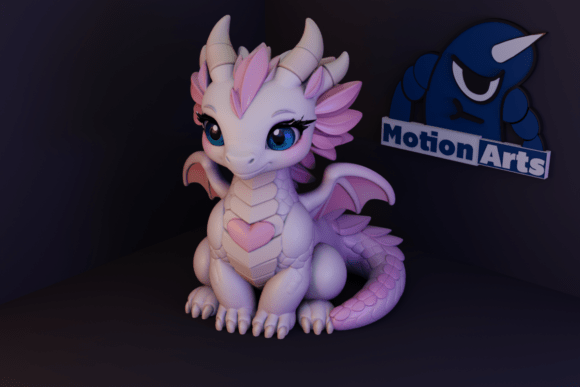
At first glance, the Fluffy Dragon STL 3D Model for Easy 3D Print presents itself as a charming, cartoon-style creature. Its rounded proportions and delicate expression evoke a sense of warmth and approachability, moving away from the aggressive or overly realistic depictions often seen in fantasy media. However, beneath this cute exterior lies a robust engineering framework designed to withstand the rigors of FDM (Fused Deposition Modeling) or even resin printing.
Structural Integrity in Delicate Areas
One of the most critical challenges in printing small, intricate figures is maintaining the integrity of thin features like wings, horns, and claws. Many models fail because these areas are too thin, leading to breakage during post-processing or handling. The Fluffy Dragon addresses this by incorporating reinforced thickness in these specific zones. The wings, though small, are modeled with sufficient volume to prevent snapping, while the tips retain their sharp definition without requiring excessive support material.
This balance is achieved through careful manipulation of mesh density and wall thickness. The designer understands that a model must be both visually appealing and structurally sound. For entrepreneurs and product designers, this serves as a valuable lesson: aesthetics should never compromise functionality. By ensuring that the scales and chest plates have enough relief to maintain definition without creating overhangs that require extensive support, the model ensures a smoother printing experience and a cleaner final finish.
The Heart of the Matter
A standout feature of this model is the heart carved into the dragon’s chest. This detail adds a layer of emotional depth, transforming the object from a simple monster into a symbol of affection. In the context of personalized gifts, this nuance is invaluable. Whether intended for a child’s room decoration, a commemorative date present, or a collector’s shelf, the heart motif invites interaction and storytelling. It demonstrates how subtle design choices can elevate a product’s marketability and emotional impact.
Technical Specifications and User Workflow
Understanding the technical requirements of the Fluffy Dragon STL 3D Model for Easy 3D Print is crucial for achieving optimal results. The model is categorized as Intermediate difficulty, suggesting that while it does not require expert-level skills, it does benefit from a basic understanding of slicer settings and printer calibration.
- Support Requirements: The model requires supports, particularly under the wings and along the tail’s curve. However, due to the strategic placement of these elements and the use of rounded edges, supports can often be removed cleanly, minimizing surface damage.
- Orientation: Optimal orientation is key. Printing the dragon upright allows gravity to assist in layer adhesion for the body, while strategic rotation can minimize visible support marks on the face and chest.
- Material Selection: PLA remains the top choice for its ease of use and vibrant color options, which enhance the cartoon style. PETG or ABS can be used for increased durability, especially if the piece is intended for handling by children.
For freelancers and content creators, mastering the nuances of this model can lead to unique content opportunities. High-quality renders or timelapse videos of the printing process can engage audiences interested in the "behind-the-scenes" of 3D creation. The model’s charm makes it an ideal subject for social media campaigns focused on creativity, parenting, or fantasy themes.
Market Relevance and Commercial Potential
The rise of the Fluffy Dragon STL 3D Model for Easy 3D Print aligns with several macroeconomic trends in the maker economy. Firstly, the demand for hyper-personalized products continues to grow. Businesses are leveraging 3D printing to offer customized merchandise that mass production cannot replicate. A dragon with a specific color scheme or a modified accessory can become a unique selling proposition for small businesses.
Secondly, the educational sector is increasingly adopting 3D printing as a teaching tool. This model’s balanced complexity makes it suitable for classroom projects, where students can learn about geometry, structural engineering, and digital sculpting. The "fluffy" and non-threatening appearance reduces the intimidation factor, encouraging younger students to engage with technology.
Furthermore, the collectibles market is expanding beyond traditional action figures. Enthusiasts are seeking limited-edition, artist-designed pieces that hold artistic value. The Fluffy Dragon, with its harmonious proportions and detailed texturing, fits well within this niche. Creators can license such models or produce limited runs, tapping into a market that values craftsmanship and originality.
Conclusion: A Blueprint for Modern Digital Craftsmanship
The Fluffy Dragon STL 3D Model for Easy 3D Print is more than just a downloadable file; it represents a shift in how we conceptualize and produce digital artifacts. It proves that fantasy and practicality are not mutually exclusive. By combining a whimsical aesthetic with rigorous engineering principles, this model offers a template for success in the 3D printing industry.
For professionals and enthusiasts, the takeaway is clear: successful design requires empathy for the end-user, whether that user is a machine or a person. Understanding the limitations and capabilities of the printing process allows designers to create pieces that are not only beautiful but also reliable and accessible. As the technology continues to advance, models like the Fluffy Dragon will serve as benchmarks for quality, inspiring a new generation of creators to push the boundaries of what is possible in additive manufacturing.
Whether you are looking to add a touch of magic to your workspace, create a memorable gift, or explore the potential of 3D modeling, the Fluffy Dragon stands out as a shining example of what happens when creativity meets precision. It is a reminder that in the world of 3D printing, every layer matters, and every detail contributes to the final story.